The Public Realm Is Not a Blanket Licence: Clearing UK Public Spaces for Stock Use in 2026
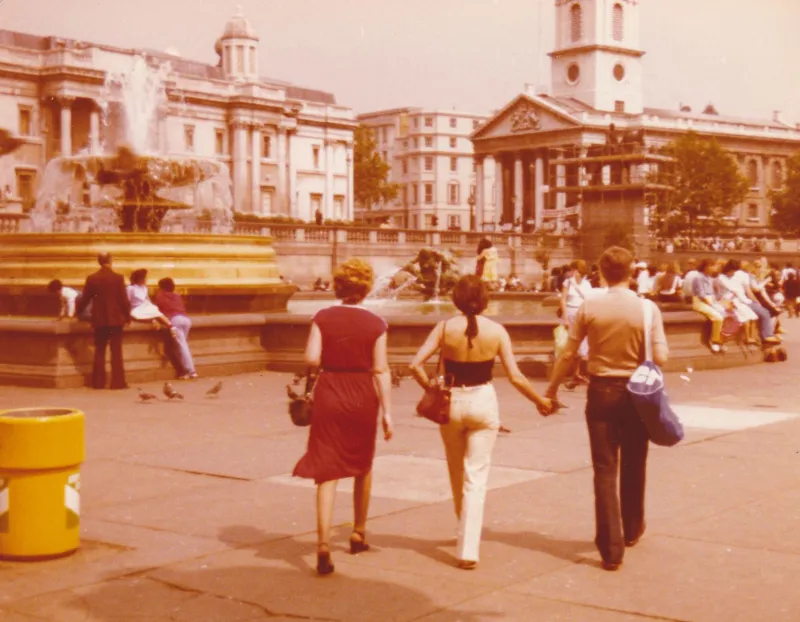
The most common licensing error in UK public-space imagery is a category mistake. A buyer sees a recognisable park, square or seafront and assumes that because the place is public, the picture is free of further obligations. Copyright in the photograph is one question. Permission to commercially depict the land, structures and managed environment is another. At i-Stock UK, the distinction surfaces repeatedly in buyer enquiries, and in 2026 it belongs in the brief, not in the post-purchase review.
The Image Right and the Place Right
A stock licence typically grants rights in the photograph as a copyright work. It does not automatically grant a right to enter land, to stage a commercial shoot, to imply endorsement by a public body, or to use a location in breach of byelaws. Nor does it resolve third-party rights in artworks, branding, notices or people.
UK law contains limited provisions, such as section 62 of the Copyright, Designs and Patents Act 1988, that can permit the depiction of certain permanent public buildings and sculptures. Those provisions are not a general commercial clearance for the surrounding land, for every object in frame, or for the terms on which a site is managed. A public place is not the same as public domain.
Royal Parks: Permit Conditions Before Composition
The Royal Parks are a useful example of why the location name is only the start. Commercial photography and filming in these spaces is generally subject to permission and may carry conditions on equipment, timing, access, insurance, fees and credit. A stock library licence is not a Royal Parks permit. A photographer who captured an image without a permit may still own the copyright, but that does not make the commercial use risk-free for the licensee.
Buyers should ask whether the image was shot under a permit, what the permit allowed, and whether the intended advertising or corporate use falls inside it. Where the file metadata is silent, the safer course is to treat the image as editorial-only or to seek specific confirmation.
Council Land and the Byelaw Layer
Council-owned parks, squares and promenades are not governed by a single national rule. Local authority byelaws, filming policies and estate management terms can distinguish news and editorial photography from advertising, promotional or stock shoots. Some sites require advance notice, public liability insurance or a fee. Others restrict tripods, drones, road closures or access outside opening hours.
The practical point is not that every council image needs a permit. It is that the buyer cannot tell from the photograph alone. The due-diligence question is who manages the land and what that manager requires for the proposed use.
Squares, Promenades and Privately Owned Public Space
Many UK squares and plazas that feel public are privately owned or managed. Some are privately owned public spaces with their own security and photography rules. Promenades, piers and seafronts may be held by councils, trusts or private estates. Common land is not necessarily a free location for commercial shoots; common rights and management plans can sit alongside public access.
Crown land is similarly varied. The Crown Estate, Royal Parks and other crown-held or crown-managed interests are not interchangeable. The word Crown in a location description is not a clearance category.
Transport-adjacent public areas deserve particular care. Stations, depots, ports and airport forecourts can combine security restrictions, operator terms, trademarks and controlled access. Commercial photography at a station or on a transport network often requires permission from the operator or infrastructure manager, even where the photographer is standing on a public footpath.
A 2026 Due-Diligence Checklist
- Identify the land manager, not just the location name on the map.
- Check byelaws, filming and photography policies, and whether the intended use counts as commercial.
- Separate editorial from advertising. Confirm that the stock licence covers the media, territory and duration you need.
- Audit third-party rights in frame: public art, plaques, shopfronts, trademarks, uniforms, number plates and recognisable people.
- Obtain and file any location permission. Check that it names the rights holder, the shoot, the permitted uses, the duration, the territory and any insurance or credit conditions.
- Review the stock library warranty. Does it cover copyright only, or does it also address property, access and location permissions?
- For commissioned work, put location clearance in the photographer contract and state who is responsible for permits and third-party releases.
- Keep a paper trail: permits, emails, site rules, dates and any restrictions on editing or cropping.
What to Ask Before You License
Four questions will expose most public-space gaps. Who manages the land? Is commercial photography permitted, and under what conditions? Does the permission cover advertising as well as editorial use? And does the stock library warranty extend to the location, or only to the image file?
If the answers are incomplete, do not rely on the phrase public place as a clearance. Treat the image as editorial-only, seek a specific indemnity, or commission a replacement with documented permissions. The cost of a short delay is usually lower than the cost of a campaign takedown.
The Commercial Consequence
Public-space imagery is valuable precisely because it feels familiar. That familiarity is also the risk. A recognisable location can carry a manager, a permit regime, a security policy, a trademark or a piece of public art that the stock licence never addressed. Brand teams, publishers and their agencies should record the distinction between the copyright licence and the location clearance before the image goes live.
The practical rule for 2026 is simple: license the picture, clear the place. A stock image can be technically excellent and legally incomplete. The public realm is shared, but it is not a blanket licence.
This article is general editorial guidance, not legal advice. Buyers should take advice on specific campaigns where location, publicity or contractual risk is material.