The Difference Between Weather and Witness: Licensing UK Event Imagery in 2026
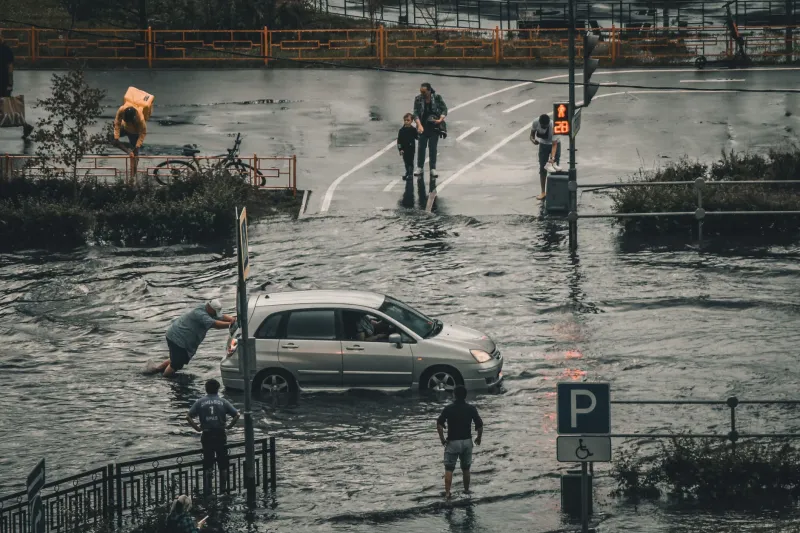
A red weather warning is not merely a meteorological event. It is a communications event. Within hours, brands, publishers and public bodies want visual material that conveys disruption, resilience or urgency. Stock libraries respond with shelves of floodwater, fallen trees, snowbound roads and heat-hazed streets. The commercial appeal is obvious; the licensing risk is equally clear. A stock photograph can illustrate a type of weather. It cannot, by itself, witness a specific event.
For UK marketers and publishers, the distinction matters most when content sits close to news. A campaign may be planned weeks in advance, but the copy around it may refer to a live amber warning, a named storm or a local authority response. In those circumstances, the image is doing more than decoration. It is shaping what the audience believes happened, where it happened and when. That is the point at which a routine licence review becomes an editorial and legal one.
Illustrative use versus evidential use
The first question is not “Is this image dramatic?” but “What is this image being asked to prove?” Illustrative use treats weather imagery as atmosphere: a generic rain-slicked high street for an insurance explainer, a windswept coastal path for a piece about winter travel, a snow-covered roofscape for a seasonal retail promotion. Evidential use implies that the image records a particular event, place or moment. It may be a news-adjacent article about flooding in a named town, a social post about a named storm, or a corporate update that appears to show the impact on a specific site.
Stock imagery is generally suited to the first use and poorly suited to the second unless the provenance is exceptional. A library file may have been captured during a real flood, but without reliable metadata it cannot be presented as evidence of the flood your copy describes. The safer editorial approach is to use neutral language alongside generic imagery: “library image”, “file photo”, “weather conditions in the UK”, or “stock image used for illustration”. If the copy needs to show a specific event, commission or license from a source that can warrant the date, location and context.
Captions carry the licence’s reputation
Captions and alt text are not housekeeping. They are part of the claim. A caption that says “Flooding in a UK town centre” is materially different from “Flooding in Shrewsbury on 3 January 2026”. The second requires a verified capture date, a confirmed location and a photographer or agency able to stand behind both. If any of those elements is missing, the caption should be widened rather than embellished.
Buyers should also check what the file itself carries. Does the metadata include a capture date? Is the location field populated, and is it credible? Does the photographer’s description match the visual evidence? Has the image been cropped, colour-graded or composited? A dramatic sky may have been replaced; a flooded road may have been extended. None of this necessarily disqualifies the image for illustrative use, but it must be disclosed where the licence or platform requires it. For news-adjacent content, a synthetic or heavily manipulated image should not be presented as a record of events.
Provenance checks need not be elaborate, but they should be consistent. Reverse image search can reveal earlier uses and conflicting captions. Agency records can confirm the original syndication date. Local authority and Met Office archives can help verify whether a warning was in force, though they do not prove that a particular photograph was taken then. The aim is not to become a weather historian; it is to avoid making a factual claim the file cannot support.
Releases, limits and the commercial context
Weather-event imagery often contains people, vehicles, buildings and emergency equipment. A model release may cover a recognisable person for commercial use, but it does not turn a scene of distress into a suitable brand campaign. Buyers should consider dignity and context as well as paperwork. Images of flooded homes, stranded motorists or emergency workers can carry editorial value while being inappropriate for product advertising. Licence terms may also restrict use in sensitive contexts, political material or content that implies endorsement.
Property releases are equally relevant. A recognisable private building, a shopfront or a distinctive interior may require clearance for commercial use. Number plates, house numbers and street signs can identify a location even when the caption does not. For campaigns, the prudent approach is to crop or select imagery that avoids unnecessary identification. For editorial use, the legal position may be more permissive, but the reputational question remains: would the people affected recognise themselves, and would they object to the context?
The licence itself should be read for territory, media, duration and print run. A file licensed for a UK digital campaign in 2026 may not cover out-of-home, international editions or indefinite social use. Editorial-only licences should not be stretched into advertising. If the image is to be used alongside copy about a current warning, check whether the licence permits news-adjacent or sensitive-topic use. When in doubt, ask the supplier to confirm in writing.
A practical protocol for the weather-event shelf
Before downloading, i-Stock UK recommends a short protocol. First, define the role of the image: illustration, explanation or evidence. Second, verify the caption against the file’s metadata and the supplier’s record. Third, decide whether the copy names a place, date or event; if it does, ensure the image is not being used to imply a connection it cannot prove. Fourth, review releases for people and property, and confirm that the licence covers the intended media and context. Fifth, add a clear label where the image is generic, library-sourced or illustrative.
That final step is often the most effective risk control. A simple “stock image for illustration” line, placed close to the image rather than buried in a footer, prevents a reader from treating a library file as a live report. It also protects the publisher’s credibility. Weather events move quickly; corrections are costly. The discipline of separating weather from witness is not a restriction on creativity. It is a condition of using stock imagery responsibly in UK campaigns and news-adjacent content in 2026.