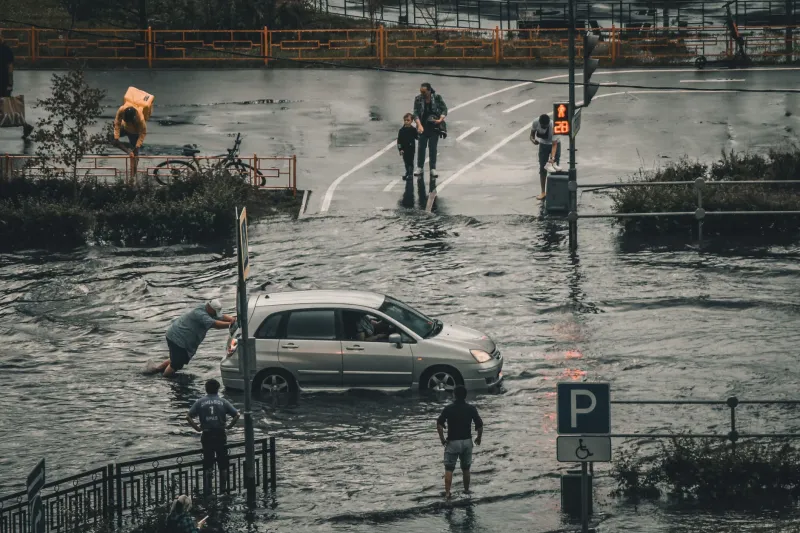
Evidence, Not Aesthetics: Licensing UK Stock Visuals for Sustainability Claims
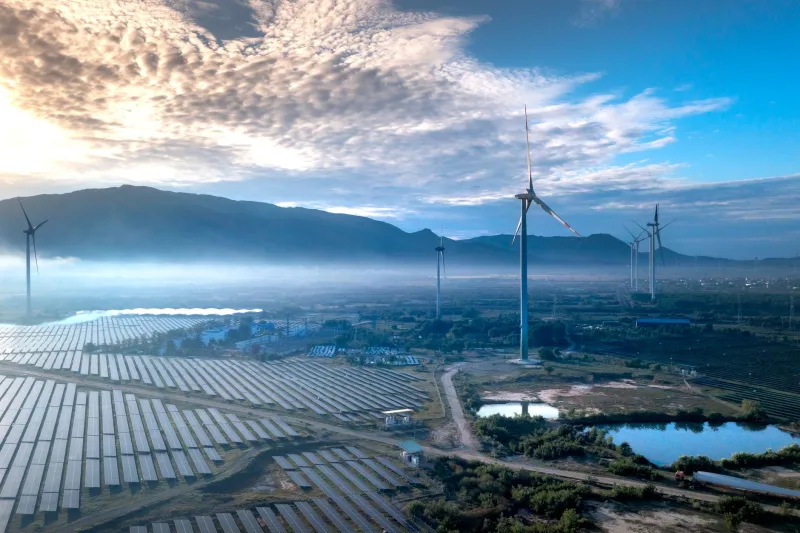
A photograph cannot substantiate a claim. That simple principle should govern every stock search for a UK sustainability campaign in 2026. Green imagery is persuasive precisely because it works at speed: a seedling, a wind turbine, a recycling symbol or a patch of British woodland can suggest environmental benefit before the viewer has read a single word of copy. For designers and marketers, the risk is not that such images are inherently misleading. The risk is that they are asked to carry a claim the underlying business cannot prove.
Start With the Claim, Not the Colour Palette
The brief should begin with the sentence the business intends to publish and the evidence held to support it. Is the claim about reduced operational emissions, recycled packaging content, renewable electricity procurement, water use, biodiversity or a specific product attribute? Each requires a different visual language. A generic globe or leaf motif tells the viewer almost nothing and may imply a broader commitment than the evidence allows.
At i-Stock UK, the useful question is not whether an image looks sustainable. It is whether the image, the caption, the alt text and the surrounding layout stay within the boundaries of the claim. If the evidence is site-specific, the imagery should be site-specific. If the claim relates to a UK factory or a British supply chain, a wind farm photographed overseas may create a misleading overall impression even when the licence is perfectly valid.
Where Stock Imagery Quietly Overclaims
Common greenwashing traps are rarely the result of bad intent. They arise from convenient visual shorthand. Hands cradling a seedling can imply offsetting or carbon removal. A polar bear can imply climate action on a scale the campaign does not deliver. A recycling triangle can imply that a product is widely recyclable in the UK when local collection varies. Brown kraft paper can imply natural or plastic-free status without evidence.
Composite imagery adds another layer. A stylised scene of solar panels, bicycles and lush planting may read as a depiction of the advertiser's own operations. Under the UK advertising rules, the overall impression matters, including images, captions, layout and any qualifying text. A note buried in terms and conditions is unlikely to correct a strong visual implication. The safer approach is to choose images that illustrate the claim accurately, or to use captions that clearly mark the image as illustrative where that is the honest position.
What the ASA and CMA Expect in Practice
The Advertising Standards Authority applies the CAP Code, which requires environmental claims to be substantiated and presented without ambiguity. The Competition and Markets Authority's Green Claims Code sets out related principles: claims should be truthful, clear, complete and supported by evidence. Neither regime treats stock photography as decoration that sits outside the claim. If an image creates an impression that a product or business is environmentally beneficial, that impression should be capable of substantiation.
This is not a reason to avoid environmental imagery. It is a reason to keep a record. Before download, the buyer should be able to identify the claim the image supports, the evidence file behind that claim, and the reason this particular image was chosen. After download, the licence, source, caption, location and any restrictions should be stored alongside the campaign assets. If the image is staged, composite or AI-generated, that should be noted internally and, where relevant, disclosed to the audience.
Certification Marks, Eco Symbols and Releases
Some of the most dangerous elements in a stock image are small. Certification marks, eco-labels and industry symbols are often protected trademarks. The Forest Stewardship Council mark, Fairtrade mark, B Corp logo, EU Ecolabel and various carbon-neutral badges cannot simply be borrowed because they appear in a photograph. Commercial use may require permission from the mark owner, and use in a way that implies certification without authorisation is a clear risk.
Model releases need similar scrutiny. A release permitting use of a person's image does not automatically permit the impression that the person endorses an environmental claim. Property releases matter where private land, identifiable buildings or controlled locations are central to the image. Editorial-only stock should not be repurposed for commercial sustainability messaging without checking the licence terms. If the image shows branded equipment, uniforms or vehicles, the brand owner's rights may also need consideration.
Provenance Is Part of the Creative Direction
A credible UK brief asks for more than a mood. It asks where the photograph was taken, when, by whom and under what conditions. For a campaign about British operations, an image of a UK offshore wind farm, a British recycling facility or a recognisable regional landscape may be more defensible than a generic international scene. Provenance also affects caption accuracy: a photograph of a Danish wind farm should not be captioned as a British installation.
The brief should specify geography, date range, release requirements, prohibited logos and permitted modifications. It should state whether AI-generated or composite imagery is acceptable. It should ask for unbranded, released images wherever possible. And it should require captions and alt text that describe what is visible rather than what the campaign wishes were true.
A Practical Checklist Before the File Goes Live
Confirm that the claim is substantiated and that the image does not imply a wider benefit. Check that the location and date are consistent with the claim. Verify that no unlicensed certification mark appears. Confirm that model and property releases cover the intended use. Review the caption and alt text for overclaiming. Log the licence, source and download date. Keep editorial-only images out of commercial contexts. Where an image is illustrative, say so plainly.
Green is not a claim. It is a colour, a mood and, in stock licensing, a set of choices about provenance and permission. In 2026, the strongest sustainability visuals will be the ones that can survive a simple question: what exactly does this image say, and what evidence stands behind it?