The Airspace Is Part of the Licence: Auditing UK Aerial Stock in 2026
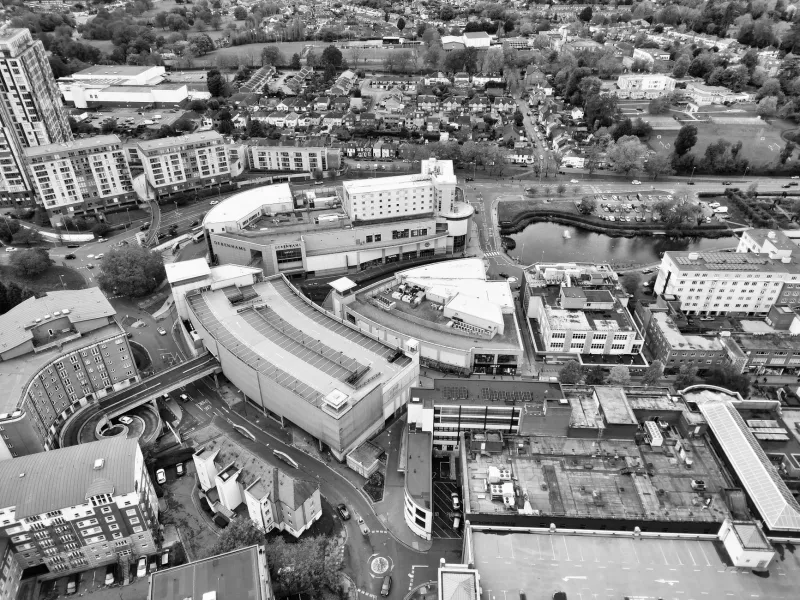
Aerial stock imagery has an immediate commercial appeal. It lifts a campaign above the ordinary, gives a UK town or campus a sense of scale, and turns a distribution centre or coastal town into a strategic landscape. Yet the cleaner the view, the easier it is to forget that the file arrives with more than pixels. It arrives with a flight history, a location history and a permissions history. In 2026, the useful question for UK buyers is not simply whether an aerial image is beautiful. It is whether the airspace, the ground and the people beneath it were cleared for the use now being proposed.
Begin with the flight, not the frame
Aerial stock is produced through a chain of separate decisions. A remote pilot decides where to launch and land. An operator decides who may fly and under what category. The flight itself must sit within UK Civil Aviation Authority rules and any local airspace restrictions. Then there are ground rights: permission from a landowner to take off from private land, and often a separate question about capturing a private estate, historic property or identifiable individual. A buyer who audits only the visual content is auditing the smallest part of the risk.
The practical answer is to treat the airspace as part of the licence. A supplier may grant broad copyright permissions, but copyright is not a warranty that the flight was lawful or that the location was clear of restrictions. Those are separate assurances, and they should be documented separately.
The CAA layer: evidence of a compliant flight
UK drone operations are not a single category. Depending on the aircraft, location and activity, a flight may fall within Open Category rules, a Specific Category authorisation, or another approved framework. The details matter less to a marketing team than the evidence: was the pilot competent for the operation, was the aircraft registered where required, and was the flight conducted within the conditions attached to that operation?
For stock files, ask for the basics in a supplier provenance sheet: operator identity, remote pilot competency reference where relevant, aircraft type, date of capture, approximate location, maximum altitude and the operational category. Do not expect a buyer to interpret technical aviation law, but do expect a supplier to confirm that the flight was conducted lawfully. If a supplier cannot describe the operating basis in plain terms, that is a warning sign.
Airspace is not empty space
Aerial images often show places that sit beneath controlled airspace, airport flight restriction zones, military areas, prison estates, nuclear sites or temporary restrictions issued by NOTAM. Central London is an obvious example, but the issue is not limited to the capital. Airports across the UK have flight restriction zones, and major events can introduce short-notice restrictions that a photographer may not have anticipated when planning a shoot.
A responsible supplier should retain flight planning records, including airspace checks and any authorisations obtained. For the buyer, the concern is commercial: an image of a sensitive site may be visually usable but reputationally awkward if the flight was not properly cleared. The licence should include a warranty that the capture did not breach applicable airspace restrictions, and the supplier should be able to explain how that conclusion was reached.
Ground rights and landmark controls
Airspace compliance is only one layer. Taking off from a private estate, country park or managed landscape may require permission from the landowner or manager. Capturing a stately home, a royal park, a National Trust property or a major heritage landmark may engage separate policies, filming fees or access conditions. These are not always matters of copyright, but they are matters of contract and practical risk.
Property releases are not a universal legal requirement in the UK in the way some buyers assume. However, a stock licence can still be undermined if the image was captured in breach of access conditions or if a depicted property has a policy against commercial use. The warranty should therefore cover permissions for launch, landing and capture where required, not merely copyright ownership.
People, privacy and the long lens
Aerial imagery can capture people in places where they have a reasonable expectation of privacy: gardens, school grounds, hospital areas, sports facilities and residential courtyards. UK data protection law and privacy expectations do not disappear because the camera is above head height. A distant figure may be unidentifiable in one crop and identifiable in another, especially with modern sensor resolution and post-production cropping.
Suppliers should document whether identifiable individuals appear and whether model releases exist. Buyers should avoid assuming that a wide aerial shot is automatically free of people issues. If the planned use is sensitive, such as recruitment, healthcare or finance, the safer brief is to avoid identifiable individuals altogether and to ask the supplier to confirm that no releases are required for the intended use.
The metadata audit
Aerial files should carry more than a camera profile. A useful audit checks EXIF and XMP metadata for GPS coordinates, capture date and time, altitude, aircraft or camera details, and any operator notes. It also checks the supplier's own records: flight log reference, airspace checks, permission references, release identifiers and a description of any edits or composites.
Missing metadata is not proof of a problem, but it is a reason to ask questions. A supplier who can provide a concise shot log is easier to rely on than one who offers only a JPEG and a generic licence PDF. For high-value campaigns, request the provenance sheet before the image is shortlisted, not after the layout is approved.
Warranties worth requesting
A robust aerial stock warranty should confirm that the flight was lawful, that required airspace authorisations were in place, that launch and landing permissions were obtained where necessary, that identifiable people and restricted properties have been considered, and that the supplier will disclose any compositing or synthetic elements. Indemnity terms should be proportionate and clear. Buyers should also ask whether the supplier maintains flight records for the duration of the licence and whether it will notify them if a later issue emerges.
Briefing for clearance, not just composition
Marketing teams can reduce risk at the briefing stage. Specify the location and the altitude range. State whether identifiable people, vehicle number plates or private gardens must be avoided. Ask for alternatives if a landmark is subject to access restrictions. Request a provenance sheet with the first delivery. Prefer suppliers who can show a documented workflow rather than a single impressive frame.
Aerial imagery remains one of the most effective ways to give a UK campaign scale and clarity. But the view from above is only commercially useful when the paperwork below it is equally clear. The licence should cover the airspace, the ground and the people in between, not just the right to reproduce the picture.