The Vacancy Is Real; the Boardroom Is Not: Casting Stock Talent for UK Recruitment Ads
The credibility problem with generic hiring imagery
A recruitment advert has a narrow task: persuade the right person to read the role, believe the setting and apply. Stock photography can support that task, but only when it is chosen with the same care as the job description. Too many UK campaigns still rely on a familiar shorthand: a smiling group in a glass corridor, a handshake over a laptop, a high-vis jacket with no visible task. Candidates recognise the pattern, and the advert begins to feel interchangeable with every other vacancy in the sector.
The problem is not that stock imagery is artificial. The problem is that vague imagery makes a specific promise it cannot keep. A care advert that shows a spotless lounge with no residents tells the candidate little about the work. A logistics advert that shows a pristine warehouse floor without forklifts, scan guns or shift handovers suggests a job that does not exist. In 2026, with recruitment markets still competitive in several UK sectors, the advantage lies with employers who brief for credibility rather than polish.
Start with the role, not the demographic
The most useful brief begins with the work itself. What is the person doing at 9am, at 2pm and at the end of a shift? What tools, clothing and surroundings are unavoidable? What would a candidate from the same sector notice immediately if it were missing? Those answers should shape the image search long before anyone discusses age, ethnicity or gender.
This matters for legal as well as editorial reasons. Recruitment imagery should not signal that a role is suited only to a particular group unless a genuine occupational requirement applies. The safer and more effective approach is to brief for capable people doing credible work, then select a shortlist that reflects the real applicant market without turning diversity into a decorative pose.
Four sector briefs that hold up
Care
Care imagery needs dignity before warmth. Look for scenes that show assistance, conversation or record-keeping without turning residents or patients into props. Avoid images where an older person is passive while a younger carer performs for the camera. Check whether the setting looks like a UK care home, domiciliary visit or supported living environment rather than a hotel lounge. If the image includes a uniform, badge or identity card, confirm that no real organisation is identifiable. Any identifiable service user would need consent, and in many care settings a release from a resident or patient is not enough on its own; the employer must also consider capacity, safeguarding and confidentiality.
Logistics
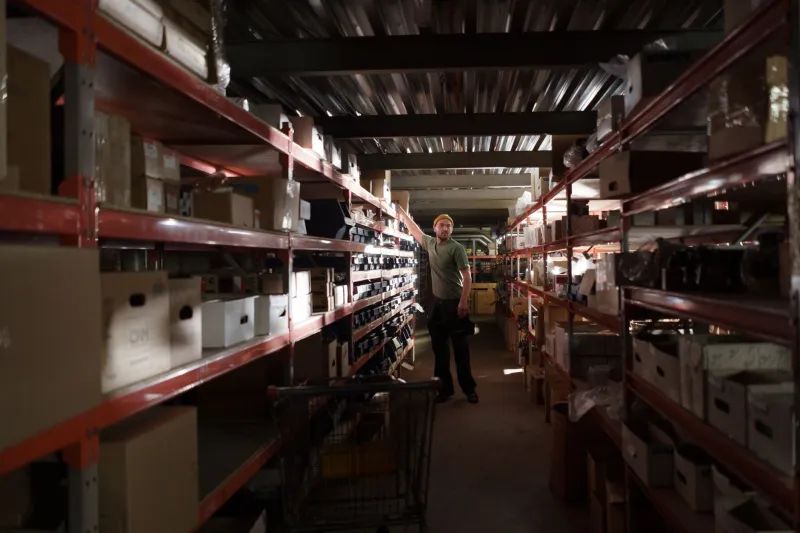
Warehouse and transport imagery should show the physical reality: loading bays, pallet trucks, handheld scanners, PPE and the geometry of a working floor. Avoid images that depict unsafe practice, such as someone standing on a forklift fork or walking behind a reversing vehicle. High-visibility clothing should look appropriate to the site, and branded vehicles or uniforms should be checked for third-party marks. A regional brief might ask for a distribution centre rather than a generic industrial estate, but the property release and any identifiable site signage still need clearance.
Hospitality
Hospitality recruitment has to balance front-of-house warmth with back-of-house grit. A kitchen image with no heat, no stainless steel and no service pressure will not convince a chef. A bar image that focuses on alcohol may also create avoidable issues for an employer trying to broaden its applicant pool. Look for teamwork, preparation and customer contact that match the actual shift pattern. Uniforms, name badges and menu boards can carry third-party branding, so check the file at full resolution before use.
Professional services
Professional services campaigns are often the worst offenders for glass-corridor abstraction. A better brief shows the work: a solicitor reviewing documents with a client, an accountant explaining a schedule, a project team discussing plans at a desk. Avoid images where confidential papers or screens are legible; any visible client name, account number or case detail should be removed or avoided altogether. If the image is used to suggest that the people shown work for the advertiser, the copy must not make that claim unless they do.
Regional credibility is more than a skyline
A UK-wide campaign does not need twelve different photo shoots, but it should avoid a visual language that feels exclusively London-centric. Regional credibility comes from small signals: the light, the architecture, the clothing, the street furniture and the pace of the scene. A candidate in Leeds or Cardiff can usually tell when a workplace has been borrowed from a generic international image library.
That does not mean every advert needs a recognisable landmark. In fact, identifiable locations can complicate licensing. If a building, shopfront or interior is protected by a property release, the licence may restrict commercial recruitment use. When the location matters to the brief, ask the library whether the image has a property release and whether recruitment advertising is within the permitted scope. When it does not matter, choose a setting that is credible without being identifiable.
Releases: what the file must prove
A model release is not a universal permission slip. It should cover the intended use, territory and duration. Recruitment advertising is commercial use, so an editorial-only image is not suitable. Check whether the release allows the image to appear in job boards, paid social, outdoor screens and internal intranet pages, and whether it covers the life of the campaign. If the advert may run across multiple employers or a recruitment agency, confirm that the licence permits that broader use.
For people who appear in the background, the same question applies. A busy cafe scene may include customers who are not the main subject but are still recognisable. Some libraries accept crowd scenes under a general release; others do not. The safe course is to ask, record the answer and keep the licence with the campaign file.
Workplace depiction limits
Recruitment imagery often brushes against regulated settings. Healthcare, education, childcare, construction and transport all carry depiction limits that a general stock licence may not explain. Look for images that avoid identifiable NHS trusts, school uniforms, safety breaches, controlled medicines, vulnerable adults and children without consent. If the advert implies that a candidate will work in a regulated environment, the image should not suggest that the employer is already providing a service it does not provide.
Authenticity claims and the advert copy
Stock imagery can illustrate a role without pretending to be a documentary record. The risk arises when copy says 'meet our team' or 'this is our warehouse' over an image of models. UK advertising rules require claims to be truthful and not misleading. A simple change of wording, such as 'join a team like this' or 'typical work in our sector', can preserve the visual while removing the false claim. Captions, alt text and social copy should follow the same discipline.
A pre-flight checklist for UK recruitment imagery
- Does the image show the actual task, tools and environment closely enough to survive a sector expert's glance?
- Is the setting regionally plausible without relying on an identifiable location that needs clearance?
- Does the model release cover commercial recruitment use, the territory, the duration and the channels?
- Are uniforms, badges, vehicles, screens and signage free of third-party marks?
- Does the image avoid unsafe practice, confidential information and identifiable service users?
- Does the copy avoid claiming that models are employees or that a stock location is the employer's site?
- Is the licence stored with the campaign file and checked again before renewal?
At i-Stock UK, the useful question is not whether an image looks like a recruitment advert. It is whether the image helps a candidate understand the job without being misled about it. A credible brief, a clean release and honest copy will do more for a vacancy than another glass corridor ever can.