Twelve British Micro-Seasons to Brief Before the Crowd Arrives
The UK creative calendar has four seasons and dozens of smaller ones. A brief that asks for autumn leaves or summer sunshine will produce familiar imagery; a brief that asks for the first frost on an allotment, the shoulder-season promenade or the nervous first week of the school run can produce something more locally observed. Micro-seasons are short, regional and easily missed. They are also useful precisely because they carry specificity without requiring a national holiday or a major event.
The following calendar is a planning tool rather than a weather forecast. Dates shift by region and by year, so briefs should allow for variation. The commercial point is to license or commission ahead of the window, with the right releases and permissions already considered.
1. Snowdrop threshold, late January to February
Brief low-angle clusters in churchyards, woodland edges and gardens, with wet stone, moss and muted light. Avoid the postcard cliché of a single perfect flower; show scale and place. Licensing note: check access and property permissions for private gardens and church land, and use editorial licensing where identifiable locations would otherwise need clearance.
2. Lambing week, March to April
Brief hands, straw, pens and practical clothing, with a respectful distance from the animals. Do not stage unsafe handling. Licensing note: farms are private businesses, so model and property releases are essential for commercial campaigns. Avoid veterinary or welfare claims unless they can be substantiated.
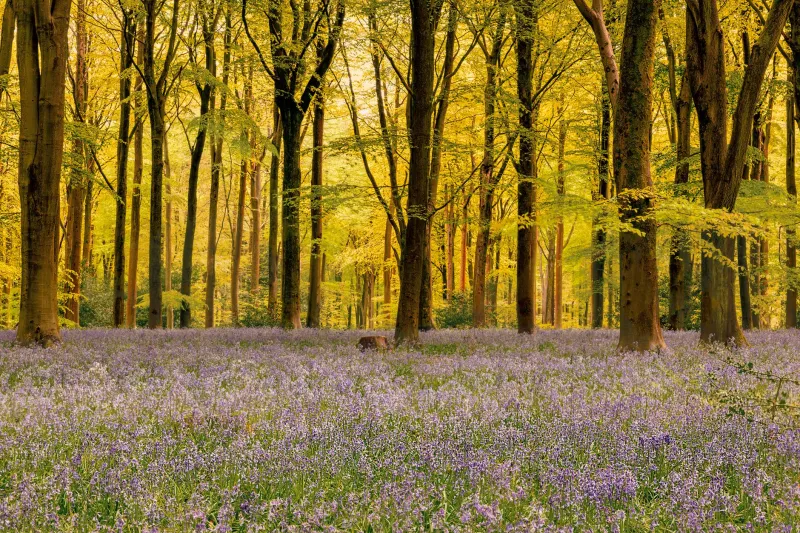
3. Bluebell fortnight, late April to May
Brief ancient woodland floors, dappled shade and paths that keep people off the flowers. Licensing note: many bluebell sites are protected or managed. Confirm access and avoid implying that vulnerable habitats are open to trampling.
4. Rapeseed bloom, April to May
Brief field edges, footpaths, tractor tracks and the yellow-green contrast against British weather. Licensing note: fields are private land. A roadside frame or a licensed drone shot can work without suggesting public access.
5. Hay harvest, June to July
Brief bales, late light, dust, machinery and the practical rhythm of a working farm. Licensing note: machinery brands and farm signage may need clearance or careful framing. People should be released for commercial use.
6. County show season, July to August
Brief livestock judging, produce tents, muddy boots and family audiences. Licensing note: event names, rosettes and branded clothing can create rights issues. Editorial licences may be more suitable than advertising use.
7. Hedgerow blackberrying, late August to September
Brief stained fingers, tubs, lanes and imperfect fruit. Licensing note: public paths do not automatically permit commercial use of identifiable people. Releases and location checks still apply.
8. Back-to-school commute, early September
Brief bus stops, crossings, uniforms, bags and the mix of confidence and nerves. Licensing note: children require parental or guardian releases for commercial use. School uniforms, badges and transport branding need careful handling.
9. Seaside shoulder season, September to October
Brief empty promenades, stacked deckchairs, faded paint and a bracing rather than sunny mood. Licensing note: private piers, arcades and beach huts may need property permissions. Check whether the image will be used editorially or commercially.
10. Coastal storm light, October to February
Brief spray, wet promenades, harbour walls and fast-changing skies. Licensing note: safety and welfare are part of the brief. Avoid using images of people in dangerous situations in ways that imply endorsement, and secure releases where individuals are identifiable.
11. Allotment first frost, November
Brief chard, shed doors, iced water butts and breath in the air. Licensing note: allotment plots are private or tenanted spaces. Check property permissions and avoid suggesting that produce or land is available.
12. High-street lights switch-on, late November to December
Brief crowds, shop windows, temporary stages and the ordinary bustle around a civic event. Licensing note: event branding, performers and trademarks may require clearance. If the image is advertising rather than editorial, releases and event permissions become more important.
Planning the brief before the window opens
Micro-seasons reward forward planning. A bluebell image licensed in May may be too late for a spring campaign; a storm-light image commissioned in January may miss the winter media plan. For stock buyers, the practical sequence is to identify the moment, confirm how the image will be used, check releases and property permissions, and license the asset while the visual reference is still current.
At i-Stock UK, we suggest keeping a simple seasonal brief that records the location, the weather conditions, the people and property in frame, and the intended channels. That record turns a charming local detail into a usable commercial asset. The British year is full of small, specific moments; the advantage goes to the teams that brief them before everyone else does.